
Distinct procedures.
Distinct protocols.
Autohemotherapy means using a person's own blood. In ozone autohemotherapy, oxygen–ozone exposure takes place outside the body. Major and minor autohemotherapy differ in how the blood is handled and returned.
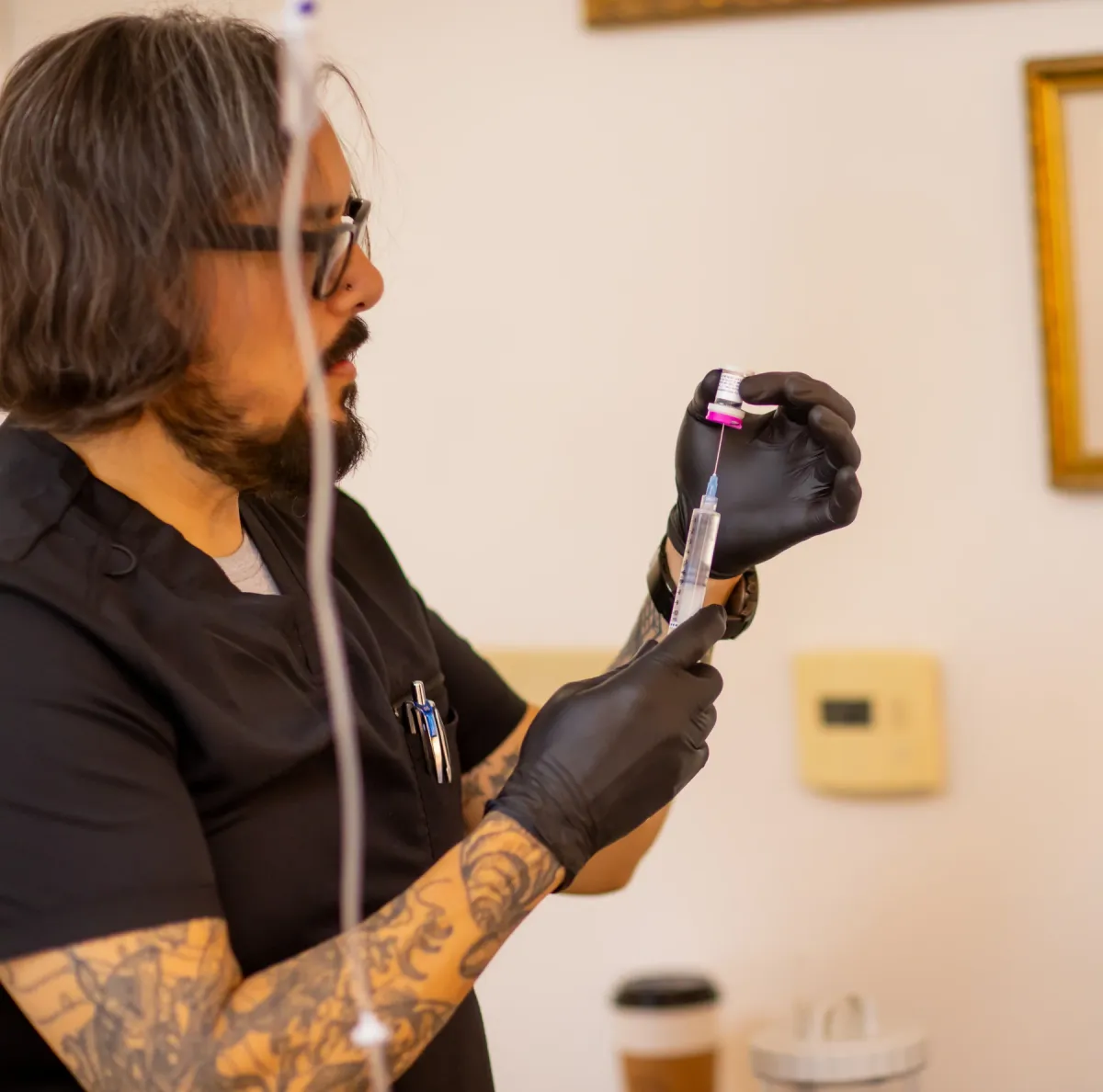
The two procedures
Understanding the two approaches.
Major Autohemotherapy
In the standard description, a portion of a person's blood is collected, exposed to an oxygen–ozone mixture outside the body and returned intravenously. This is a collected-portion process, distinct from EBOO's continuous circuit. The clinician explains the exact proposed protocol and monitoring.
Book Major AutohemotherapyMinor Autohemotherapy
Minor autohemotherapy generally refers to a small amount of a person's blood being exposed to an oxygen–ozone mixture and then administered into muscle. Its route differs from major autohemotherapy. These terms describe a technique; they do not establish suitability or clinical benefit.
Book Minor AutohemotherapyThese are general explanations, not a procedure guide. The exact treatment proposed, product and equipment, risks and alternatives must be reviewed with your clinician. For the separate continuous-circuit procedure, see EBOO.
What a clinical discussion covers
Questions to work through with a clinician.
- Health and medication history
- The exact procedure proposed
- Evidence and alternatives
- Risks, monitoring and follow-up
Evidence & individual suitability
Ozone-based procedures have risks, and benefits for many promoted uses are not established. Discuss the evidence, alternatives and regulatory status with a qualified clinician.